

Winter brings colder temperatures, comfort foods, and changes in daily habits that can impact kidney health—especially for people living with diabetes. As the season shifts, so do your body’s hydration patterns, activity levels, and dietary choices, all of which influence the progression of diabetic nephropathy. At Kidney MD, Saving Kidneys, Saving Lives, we believe that informed choices empower patients to protect their kidneys year-round. Understanding how winter affects kidney function is the first step in strengthening your health and preventing long-term complications.
Why Winter Poses Added Risk for Diabetic Kidney Health
During colder months, many individuals naturally drink less water, spend more time indoors, and gravitate toward heavier meals. For someone managing diabetes, these changes can subtly increase the strain on the kidneys. When blood glucose rises, the kidneys work harder to filter waste, and high glucose can damage the tiny blood vessels responsible for kidney filtration. This makes winter a critical time to reinforce healthy habits and closely monitor kidney function.
Individuals with a diabetic kidney condition often experience seasonal fluctuations in their symptoms or lab results. Reduced physical activity, holiday indulgences, and inconsistent medication routines can exacerbate the underlying damage. Winter self-care, therefore, must be intentional and strategic for people with diabetes.
Understanding the Connection Between Diabetes and Kidney Disease
Diabetes is the number one cause of chronic kidney disease worldwide. Persistently elevated blood sugar damages the nephrons—the microscopic filters in the kidneys—and over time can lead to diabetes mellitus nephropathy. Without proper management, this form of kidney disease can progress silently, often without obvious symptoms until significant damage has occurred.
That’s why early prevention, consistent medical follow-up, and informed lifestyle choices are essential. Winter, with its unique challenges, is a perfect time to recommit to these habits.
Recognizing Early Warning Signs
Catching changes early can make a tremendous difference in slowing or preventing kidney damage. The first indicators of trouble are often subtle but should never be ignored. Many individuals may not recognize the early signs diabetic nephropathy, but understanding them is crucial for timely intervention.
Early symptoms may include:
- Mild swelling in the feet, ankles, or hands
- Elevated blood pressure despite medication
- Fatigue or reduced energy levels
- Increased nighttime urination
- Frothy or bubbly urine
- Slight increases in blood sugar
- Unexpected changes in lab results related to kidney function
If any of these signs appear, winter is not the time to wait—it is the time to act. Consult your healthcare provider and request updated kidney tests such as microalbumin, creatinine, or eGFR.
The Importance of a Winter-Smart Diet for Kidney Protection
Cold weather often leads to dietary changes that can either support or harm kidney health. For people with diabetes, the goal is to maintain stable blood glucose while reducing the kidney’s workload. Choosing a kidney-friendly diet for diabetics ensures that meals are nourishing, balanced, and protective of long-term kidney function.
Winter Kidney-Safe Eating Tips
- Opt for warm, broth-based soups low in sodium rather than creamy, heavy versions.
- Prioritize whole grains like barley, quinoa, and brown rice to maintain steady glucose levels.
- Include winter vegetables such as cauliflower, broccoli, cabbage, and carrots.
- Choose lean proteins such as chicken, turkey, or fish instead of red or processed meats.
- Limit holiday sweets and sugary seasonal drinks that cause glucose spikes.
- Reduce salt intake, which is especially important for anyone with early kidney damage.
- Prepare meals at home to control portion sizes and ingredients.
In addition to food choices, portion control plays a major role. Winter gatherings and celebrations often encourage overeating, which can increase blood sugar and blood pressure. Monitoring portions helps keep kidneys healthier throughout the season.
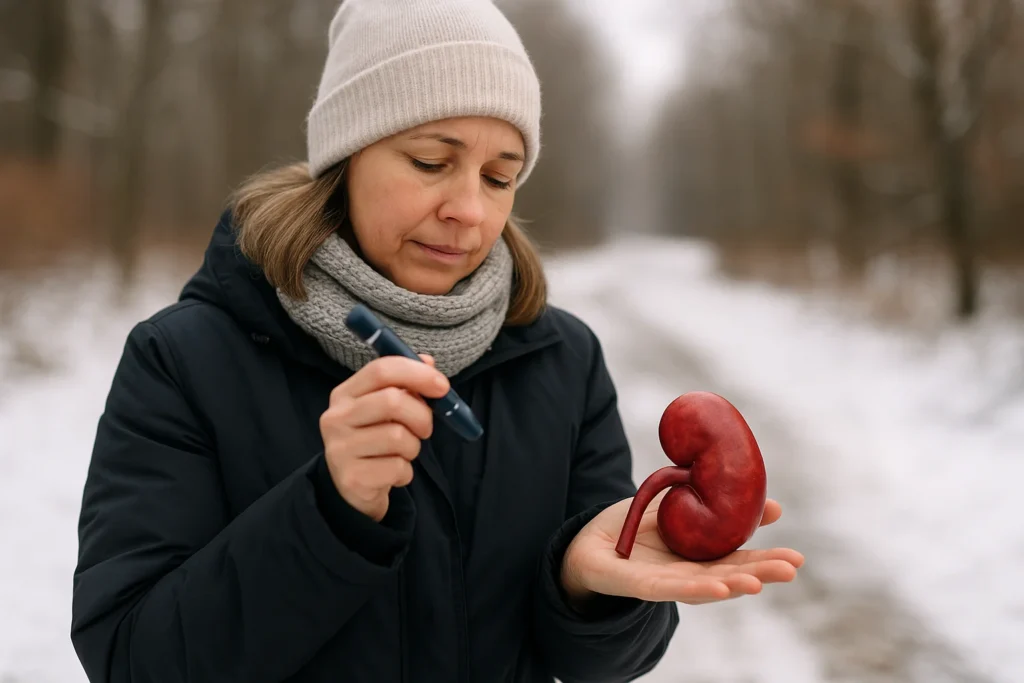
Hydration: A Winter Priority Often Overlooked
While summer naturally encourages fluid intake, winter does the opposite. Cold weather suppresses thirst, and people tend to drink less water without noticing. However, dehydration increases the concentration of waste products in the blood, forcing the kidneys to work harder.
Hydration tips for winter kidney protection:
- Sip warm herbal teas without sugar.
- Keep a water bottle nearby even indoors.
- Set hydration reminders if you tend to forget.
- Drink a glass of water before every meal.
- Limit caffeine and alcohol, both of which can dehydrate.
Consistent hydration supports healthy blood flow through the kidneys and reduces further damage, especially for people managing diabetes.
Managing Blood Sugar More Carefully in Winter
Blood glucose levels can be more unpredictable in winter due to reduced activity, stress, holiday foods, or even seasonal infections. High glucose accelerates kidney damage, so maintaining stable levels is essential.
Key strategies include:
- Monitoring glucose more frequently during cold months.
- Taking medications exactly as prescribed, even during busy holidays.
- Keeping fast-acting glucose sources for unexpected lows.
- Dressing warmly to avoid stress-related fluctuations.
- Staying physically active with indoor exercises such as walking, stretching, or stationary cycling.
By keeping glucose consistent, you reduce strain on the kidneys and protect yourself from seasonal complications.
Lifestyle Adjustments That Support Kidney Health
Beyond diet and hydration, several lifestyle habits can make winter safer for people with diabetes and early kidney concerns:
- Maintain regular sleep patterns to support hormone regulation.
- Avoid smoking, which accelerates kidney and vascular damage.
- Monitor blood pressure at home if you have hypertension.
- Stay up to date with flu and respiratory vaccines to reduce illness-related glucose spikes.
- Attend all medical appointments, even when the weather is cold.
These simple habits collectively reduce risk and help preserve kidney function long-term.
When to Seek Medical Help
If you notice sudden swelling, worsening fatigue, changes in urination, uncontrolled blood pressure, or out-of-range glucose levels, contact your healthcare provider promptly. Winter illnesses can strain the body and worsen kidney function. Early intervention ensures that any new symptoms are addressed before they progress.
Kidney MD, Saving Kidneys, Saving Lives provides comprehensive evaluation and guidance for people with diabetes to help safeguard their kidney health through every season. Whether you are managing early signs or advanced disease, expert care can slow progression and improve quality of life.
Conclusion
Winter presents unique challenges for anyone managing diabetes and protecting kidney health, but with awareness and intentional routines, you can navigate the season safely. Choosing supportive foods, staying hydrated, monitoring glucose, and recognizing early changes give you the power to safeguard your kidneys even in the coldest months. Kidney MD remains committed to guiding you through every season with trusted education, preventive strategies, and expert medical care.